Services
Why Should You Recycle Computers and Laptops?
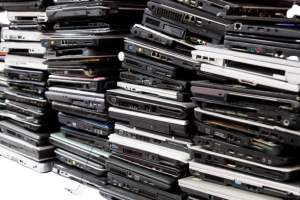
Computers are used for almost everything these days. Certain jobs are remote, some schools are online, plenty of food service is conducted electronically, etc. Through this technological increase, people are using laptops and computers more consistently. Because of this, these gadgets break down at a quicker pace. This means that there is an increase in computers and laptops that break so they are being thrown out. If these contraptions are incorrectly disposed of, they will take up space in landfills leading to a pollution increase. To avoid this, one must comprehend the importance of when to recycle computers and laptops.
Computers and laptops contain numerous valuable and reusable materials. Some of these include:
- Circuit boards
- Keyboards
- Hard drives
- Computer wires
- Cables
- Heat sinks
- Transformers
Additionally, a few of these materials have copper and aluminum components. These components can create various new products.
Also, laptop recycling:
- Reduces space in landfills
- Lessens pollution
- Prevents toxic gas releases
- Protects natural resources
- Creates employment opportunities
This series of events leads to an overall positive environmental impact. Reusing these materials leads to a reduction of solid waste in landfills. Then, this leads to less pollution, gas leaks and protection of natural resources. Laptops and computers contain toxic substances such as mercury, lead, chromium and cadmium. Hence, recycling laptops will ensure toxic substances such as these are not released into the environment.
Furthermore, recycling laptops creates more job opportunities. The more broken electronics there are, the more staff Interco will need to accelerate the process. Also, there are more jobs in recycling than there are in land-filling or incinerating waste. An increase of jobs in recycling causes the government to support the local economy and environment.
Additionally, one could make a profit by turning in used laptops and computers to professional recyclers. Interco buys scrap electronics like these to recycle them in the appropriate manner.
Now that the importance of recycling laptops and computers has been discussed, it is imperative to understand how to recycle computers and laptops.
How to Recycle Laptops: The Process
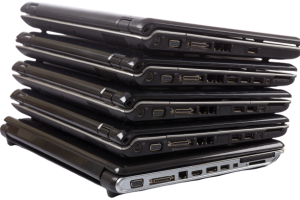
Computers and laptops are essential is today’s society. They are in use for an abundance of different services. The use of laptops and computers is increasing as more resources switch to online platforms. Because of this, a great deal of computers and laptops eventually do not work anymore so consumers throw them out. Discarding these gadgets incorrectly could lead to these materials taking up space in landfills causing a growth in pollution. To steer clear of this, one must be familiar with how to recycle laptops.
The process of recycling laptops consists of:
- Collecting and sorting the laptops and computers.
- Next, breaking the laptops and computers down with a hammer or hammering mill.
- Then, separating the individual components
- Furthermore, taking these individual components to their different recycling points for further processing
- Finally, packing non-recyclable materials and properly disposing of them in an efficient manner.
Professional recyclers put the environment and safety first when performing this procedure by following EPA regulations.
Now that the process of recycling computers has been discussed, why is this process so important?
Recycling Computers and Laptops
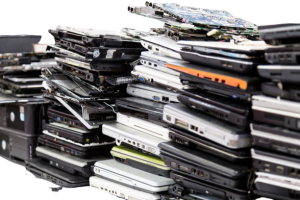
In the age of technology, computers and laptops are vital for work, school and numerous other places. With more and more services switching to online platforms, there is an increased amount of computers and laptops use. Thus, with an abundance of these products being used, they eventually break down and consumers discard of them. Consequently, with thousands of laptops and computers being thrown out every day, improper disposal could lead to these scrap materials occupying space in landfills which causes for more general pollution. To avoid this, it is crucial to understand the process of laptop recycling.
Recycling computers allows for reuse of valuable metal scrap. Furthermore, some to these reusable materials include:
- Circuit boards
- Keyboards
- Hard drives
- Computer wires
- Cables
- Heat sinks
- Transformers
In addition, materials such as heat sinks, transformers, computer wire and more contain copper and aluminum components which are reusable to make several different products.
For recycling laptops and computers, one must be familiar with the process of recycling laptops.
The process of recycling computers consists of:
- Collecting and sorting the laptops and computers.
- Breaking the laptops and computers down with a hammer or hammering mill.
- Separating the individual components.
- Taking these individual components to their different recycling points for further processing.
- Finally, packing non-recyclable materials and properly disposing of them in an efficient manner.
Thus, recyclers are sure to follow EPA regulations during this process to ensure safety and environmental protection. Additionally, now that the process of recycling laptops has been discussed, it is critical to understand why performing this process in necessary.